
New Glenn Upper Stage Failure Mars Blue Origin’s Success
Blue Origin achieved a significant milestone on the third flight of its heavy-lift New Glenn launcher, marking the company’s first successful reflight and recovery of an orbital-class booster. The 321-foot-tall rocket launched from Cape Canaveral, with its first stage performing a flawless return and landing on Blue Origin’s landing platform in the Atlantic Ocean less
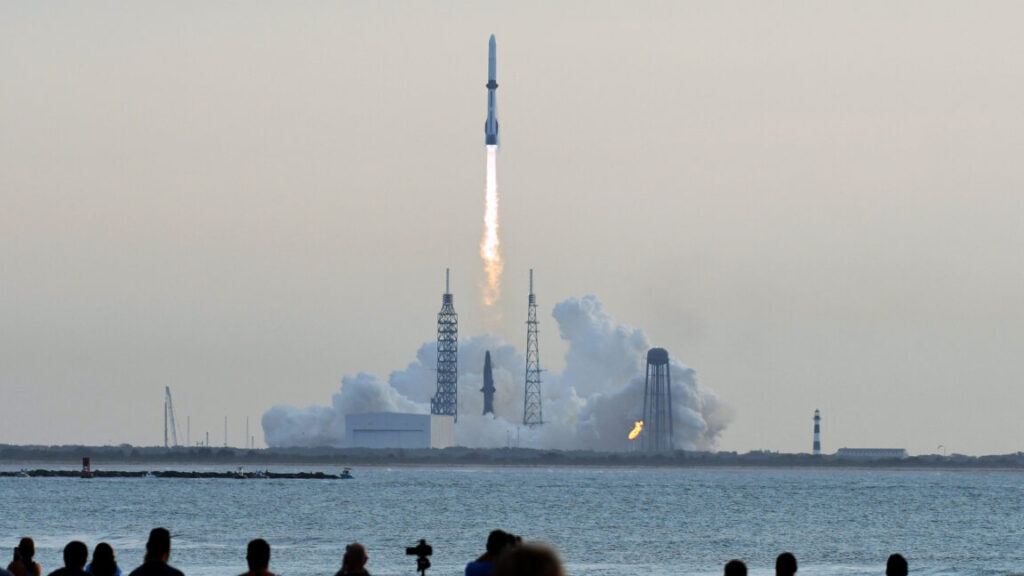
Blue Origin achieved a significant milestone on the third flight of its heavy-lift New Glenn launcher, marking the company's first successful reflight and recovery of an orbital-class booster. The 321-foot-tall rocket launched from Cape Canaveral, with its first stage performing a flawless return and landing on Blue Origin’s landing platform in the Atlantic Ocean less than 10 minutes after liftoff. This successful re-landing of the "Never Tell Me The Odds" booster demonstrated a critical step towards reusable rocketry and faster launch rates, a capability crucial for market competitiveness. This achievement, comparable to SpaceX's Falcon 9 reusability, was a moment of pride for Jeff Bezos' company.
However, the success was quickly overshadowed by a critical setback involving New Glenn’s upper stage. Blue Origin confirmed the upper stage missed its intended aim, deploying its payload – a cellular broadband communications satellite for AST SpaceMobile – into an "off-nominal orbit." AST SpaceMobile later stated the satellite's orbit was "too low to sustain operations" and would be de-orbited, with costs expected to be covered by insurance. The twin-engine upper stage, which had performed well on previous flights, was supposed to place the BlueBird 7 satellite into a precise orbit of approximately 285 miles (460 kilometers). Preliminary data indicated a much lower altitude of just 95 miles (154 kilometers), portending a rapid destructive reentry.
This upper stage failure carries significant implications for Blue Origin’s future launch manifest and partnerships. A thorough investigation will be required, potentially delaying upcoming high-profile missions, including launches for Amazon’s Kuiper broadband constellation and, more critically, the maiden flight of Blue Origin’s prototype Blue Moon lunar lander. Any schedule slip for Blue Moon directly affects NASA’s Artemis program, which relies on Blue Origin to develop landers for astronaut transport to the lunar surface. The incident also highlights challenges in the competitive direct-to-cell satellite market, where AST SpaceMobile, a startup, contends with industry giants Amazon and SpaceX.
While disappointing, such failures are not uncommon for new rockets entering service. Even highly reliable launchers like SpaceX's Falcon 9 experienced early upper stage issues that led to extensive investigations and temporary flight halts. A similar investigation for New Glenn would impact Blue Origin's ambitious launch schedule and the readiness of its Blue Moon lander. For NASA, closely monitoring its Moon lander contractors, consistent launch reliability from New Glenn is paramount to ensure confidence in supporting future Artemis missions. This event underscores the inherent complexities of space launches and the critical importance of every rocket stage functioning perfectly for mission success.
Ukraine Police Chief Resigns Over Kyiv Shooting Inaction

US Iran Tensions Escalate: Ship Seized, Talks Uncertain

Lena Dunham Details Adam Driver’s ‘Aggressive’ Outbursts On ‘Girls’ Set

Maya Jama Transforms: Sexy Weather Girl & 80s Newsreader Ad

Free-Range Chickens Return Outdoors After Bird Flu ‘Flockdown’
Remote Working Tribunals UK See First Drop Since Covid
