
Iran World Cup 2026 Spot Secured by FIFA Despite Tensions
FIFA President Gianni Infantino has officially confirmed Iran’s participation in the 2026 World Cup, an announcement that arrives amidst heightened geopolitical tensions and prior uncertainty surrounding the nation’s involvement. Speaking at the CNBC Invest America forum in Washington, Infantino firmly stated that Iran has earned its spot through rigorous qualification processes and will compete as
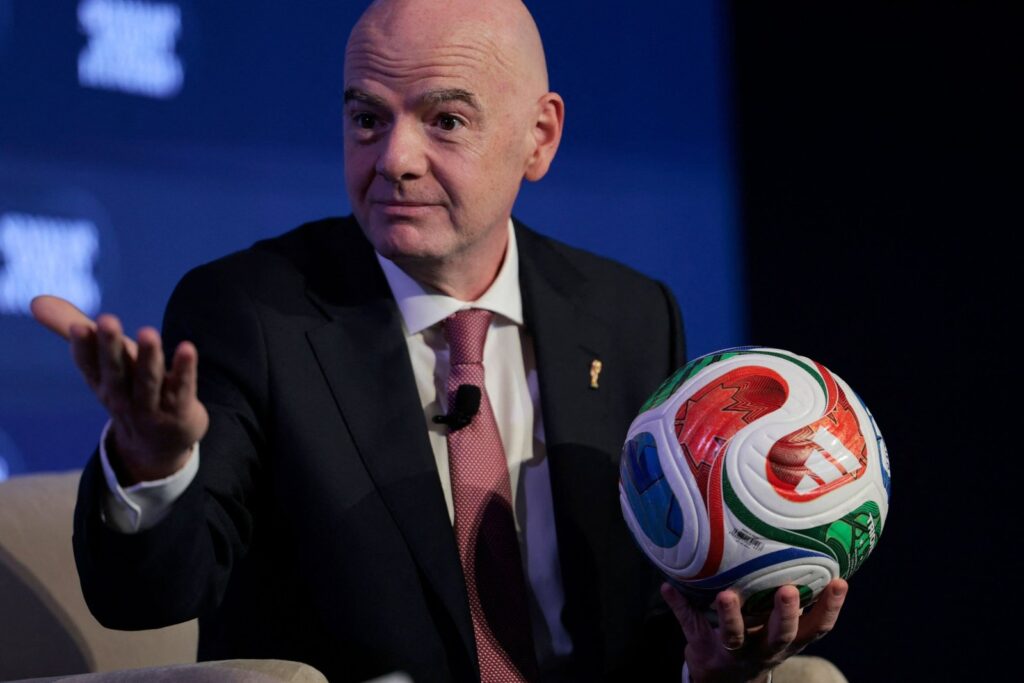
FIFA President Gianni Infantino has officially confirmed Iran's participation in the 2026 World Cup, an announcement that arrives amidst heightened geopolitical tensions and prior uncertainty surrounding the nation's involvement. Speaking at the CNBC Invest America forum in Washington, Infantino firmly stated that Iran has earned its spot through rigorous qualification processes and will compete as scheduled. This decision, as analyzed by Daljoog News, underscores FIFA's commitment to upholding sporting integrity while strategically navigating the complex political landscape that could potentially disrupt major global tournaments. The timing of this confirmation is particularly crucial as the expanded 2026 World Cup, featuring 48 teams, approaches its June 11 kickoff, with Iran slated to face New Zealand on June 15 in California.
Infantino's reaffirmation emphasizes the principle of separating football from politics, yet he acknowledged that real-world conditions cannot be entirely overlooked. FIFA is actively working to ensure all qualified teams can participate smoothly and without undue disruption. The President also shared insights from a recent meeting with the Iranian national team in Antalya, Turkey, noting their strong determination to represent their country on the global stage. This stance by FIFA aims to reinforce the idea that merit-based qualification should remain the sole criterion for participation in international competitions, providing a clear framework despite external pressures.
Beyond the immediate sporting context, Iran's confirmed participation carries significant political and economic implications. It highlights the persistent challenge of insulating major sporting events from international politics, as global tournaments often serve as a microcosm of broader geopolitical tensions. Economically, the 2026 World Cup is projected to be a massive generator of financial activity, with estimates around $80 billion in total transactions and FIFA anticipating revenues of approximately $11 billion, much of which will be redistributed to its 211 member associations. The tournament is also expected to create hundreds of thousands of jobs, both permanent and temporary, tied to its vast operations, underscoring its immense global impact.
Experts view this decision as a testament to FIFA’s dedication to neutrality and inclusivity, often positioning the organization as a bridge between nations through football. However, they caution that maintaining this neutral stance could become increasingly difficult if geopolitical tensions escalate further. While FIFA is committed to defending sporting merit, it also places a significant responsibility on host nations and organizers to ensure adequate security and stability. As preparations for the tournament intensify, security planning and diplomatic coordination will be paramount, with FIFA and host countries closely monitoring regional dynamics to ensure smooth participation for all teams and to uphold the credibility of international football.
Neymar Transfer Rumors Grow Amid Santos, MLS Tension

Lionel Messi Weke Cornell Ownership Shakes Spanish Football
Chelsea’s Europe Race Faces Collapse Amid Fierce Run-In

Konaté Shines as Liverpool Crash Out to PSG in UCL Exit

Western firms linked to global illegal betting networks

McIlroy Defends Masters Title in Dramatic Augusta Finish
